Why Can’t I Just Use AI to Stage My Property?
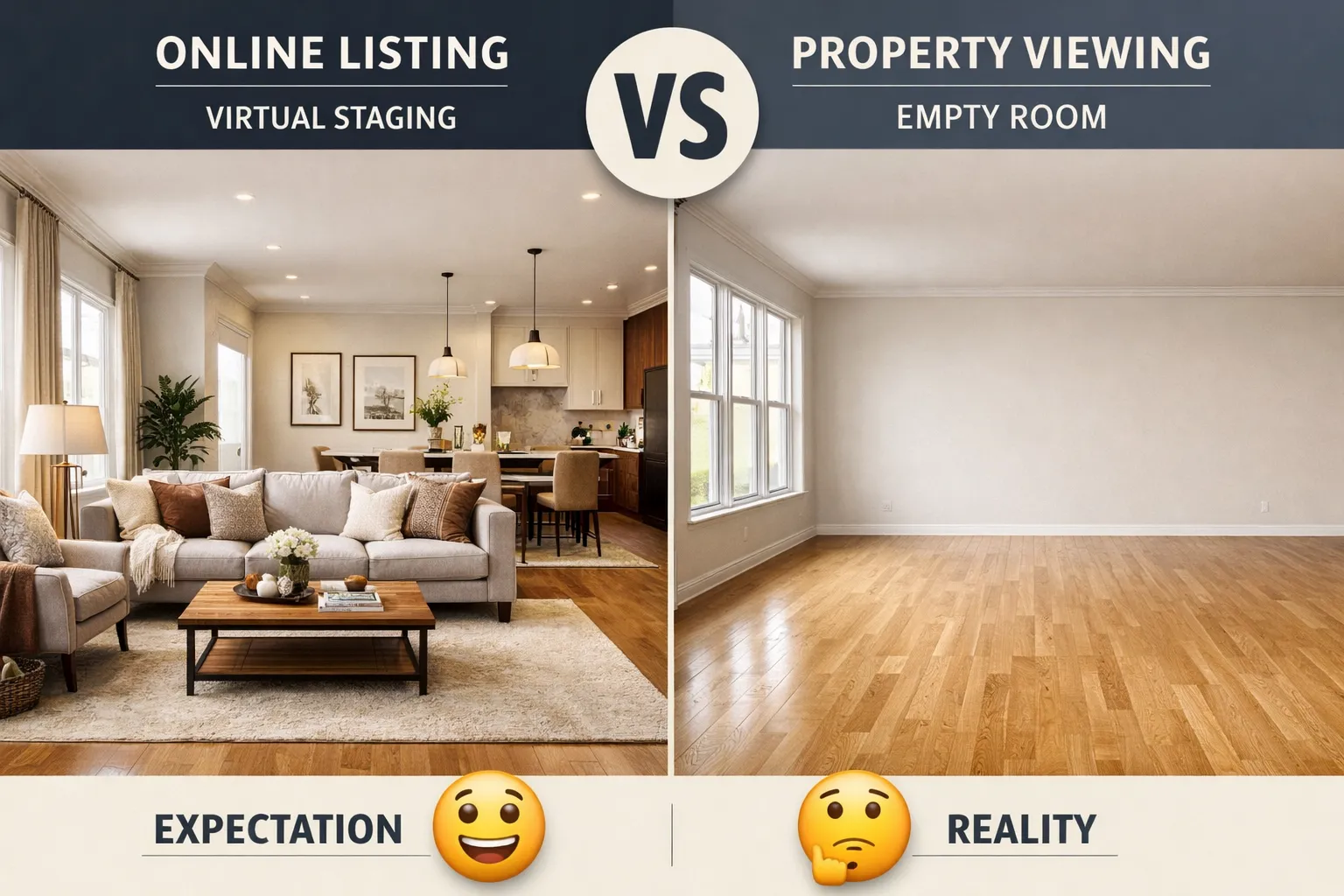
With the rapid growth of artificial intelligence tools, many property sellers are now asking the same question: “Why can’t I just use AI or virtual staging instead of physically staging my property?” AI and virtual staging technology can create beautiful images of furnished rooms in seconds. It’s fast, affordable, and increasingly common in property marketing but when it comes to actually selling a home there is a significant difference between virtual staging and physical property staging.
Let’s look at why.
AI Staging and Virtual Staging: What Is It?
Virtual staging (sometimes called AI staging) uses software to digitally add furniture, décor and styling to photos of empty rooms. The result can look very impressive online. A bare living room can suddenly appear fully furnished with sofas, artwork, lighting and accessories. For marketing visuals virtual staging can be a helpful tool. It allows sellers and developers to show buyers how a space could potentially look once furnished.
This can be useful for:
- Early marketing visuals
- Planning layouts or interior design concepts
- Helping buyers visualise possibilities
- Development and refurbishment planning
So yes — AI staging absolutely has its place in property marketing. However, there is an important limitation.
The Problem with Virtual Staging When Buyers View the Property
When buyers scroll through property listings online they naturally form expectations about what they will see when they arrive at the property. If the photographs show a beautifully furnished room buyers expect the property to look similar when they walk through the door. However, if they arrive and find the property completely empty there is an immediate disconnect. Even if it only lasts a few seconds buyers experience a moment of confusion:
- “Why is it empty?”
- “This isn’t what I expected.”
- “Was the furniture real?”
This brief moment of hesitation might seem small but, in the buyer journey, first impressions are incredibly powerful. Instead of reinforcing the positive feeling created by the listing photos the viewing begins with a small sense of disappointment or doubt and that is not where you want to start.
Physical Property Staging Creates Consistency
With real home staging what buyers see online is exactly what they experience when they visit the property.
The sofa they saw in the photos is there.
The dining table is there.
The artwork, styling and lighting are all exactly as expected.
This creates consistency between the online listing and the physical viewing.
Buyers walk in and immediately recognise the space they were excited about.
Instead of questioning what they are seeing they feel reassured: “Yes — this is exactly how I imagined it.” That positive reinforcement strengthens the emotional connection buyers have already formed with the property.
Empty Rooms Often Feel Smaller
Empty rooms often appear:
- Smaller
- Less functional
- Harder to visualise
Without furniture to provide scale, many buyers struggle to understand how the space works. Professional home staging solves this problem by clearly demonstrating:
- Where furniture fits
- How rooms flow together
- How each space can be used
Ironically, once properly staged, rooms often feel larger and more usable than when they were empty.
Buyers Make Emotional Decisions
Buying a home is rarely just a logical decision.
Buyers often decide how they feel about a property within the first few seconds of walking through the door.
A professionally staged property creates:
- Warmth
- Atmosphere
- Lifestyle inspiration
- Emotional connection
Buyers can imagine themselves sitting on the sofa, hosting friends at the dining table or relaxing in the bedroom.
That emotional response is incredibly powerful in driving offers.
An empty property — even if it had beautiful virtual images online — simply cannot create the same experience.
You cannot touch virtual furniture.
You cannot feel the atmosphere of a digitally staged room.
AI Is a Helpful Tool — But It’s Not a Replacement
Artificial intelligence will undoubtedly continue to play a growing role in property marketing. AI staging tools are excellent for:
- Concept images
- Social media visuals
- Development planning
- Design inspiration
When it comes to selling a real property, to real buyers viewing in person, nothing replaces the impact of professional physical staging.
The goal of staging is not just to make photos look good, it is to create a seamless experience from online listing to in-person viewing.
When buyers walk into a home that looks exactly as they expected — beautifully styled and ready to live in — the emotional connection happens instantly, that is what helps homes sell faster and often for a stronger price.
Is virtual staging better than real staging?
Virtual staging can make listing photos look attractive online but real property staging creates a consistent experience during viewings.
Buyers often respond better to homes that look the same in person as they do in the listing photos.
Some FAQs
Yes. Professionally staged homes often attract more interest, create stronger emotional connections with buyers, and can sell faster than empty properties.
When viewing online it’s not always obvious. A trained eye can tell the difference, Ai is improving all of the time, look for the mirror reflections and shadowing, these can be giveaways! Remember, if a buyer arrives expecting a furnished property but finds it empty it can create confusion or disappointment during the viewing.
Without furniture to provide scale, buyers often struggle to visualise how a room works. Proper staging helps demonstrate layout and can make rooms feel larger and more functional.
In many cases staging can increase buyer interest and improve the perceived value of a property which may lead to stronger offers.
Article written with the help of AI
Date: 19 March 2026